Mansard roof conversion cost in London, 2026
What a mansard loft conversion actually costs in London — structure, zinc cladding, planning, timelines and how it compares to a dormer.
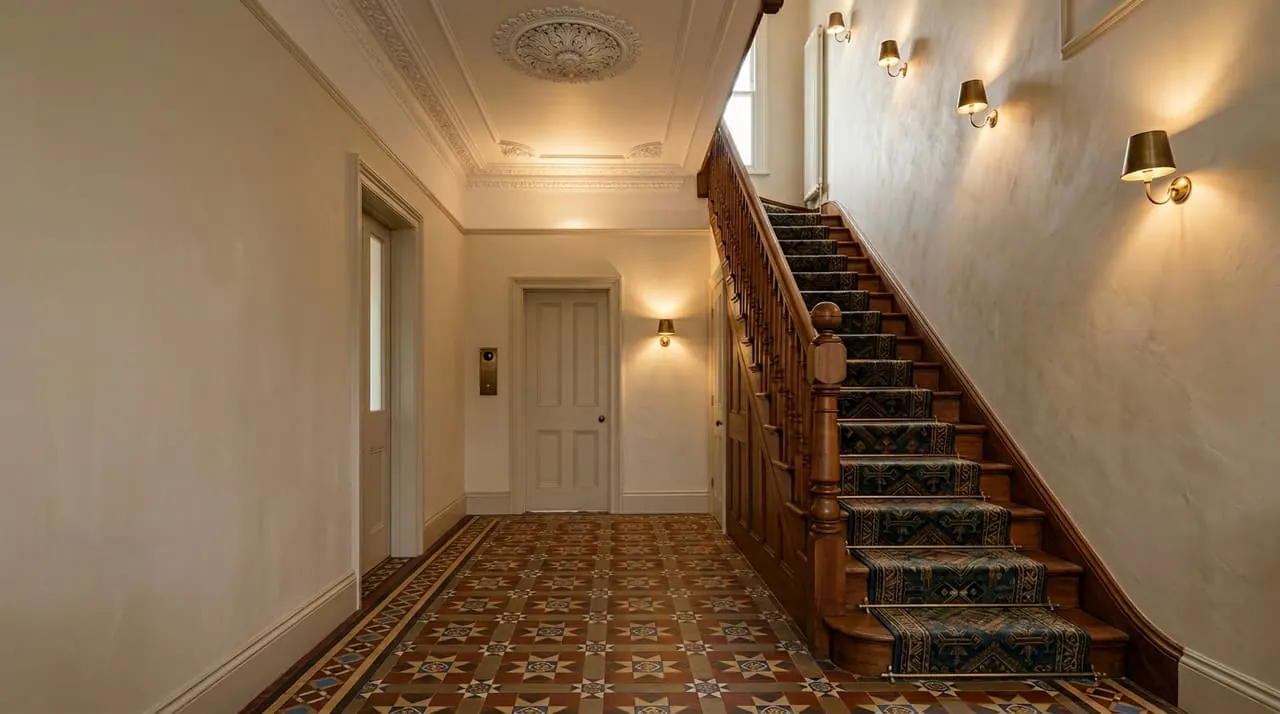
A mansard loft conversion in London costs between £70,000 and £160,000 for a typical Victorian or Edwardian terrace, including planning, structural work, waterproofing, and a basic fit-out. That's a wide range — deliberately so. A mansard involves near-complete replacement of your rear roof slope, and the biggest variable is specification: how you clad it, how many windows you want, whether you're in a conservation area, and how complex the structural connection to the party wall is. Here's how to break it down.
What is a mansard conversion?
The name comes from the 17th-century French architect François Mansart. In London building terms, it refers to a specific roof form: a near-vertical rear slope (typically 70° or steeper from horizontal) replacing the original pitched rear slope, topped with a shallow pitch at the ridge. The result is a near-full-height additional floor — you're effectively adding a room with full-height walls rather than the tapering eaves you'd get with a dormer.
Mansards are one of the defining features of central London terrace roofscapes. Walk down any Georgian or Victorian street in Islington, Hackney, or Lambeth and you'll see them: rows of identical terraces where the rear roofline has been squared off, clad in zinc or slate, punctuated by casement windows or full-height glazed sections. The councils know them well — which is both an advantage (clear policy) and a constraint (strict design requirements).
The critical distinction from a dormer: a rear dormer projects out of an otherwise intact roof slope. A mansard replaces the rear roof slope entirely. That means more demolition, more structural complexity — and substantially more usable floor area.
Mansard vs dormer vs hip-to-gable: which adds the most space?
For a typical 3-bed Victorian terrace with a 6m-wide rear elevation and a roof plan of roughly 6m × 6m:
Rear dormer: A standard rear dormer typically delivers 18–28m² of usable floor area. You retain the original rafter structure at the sides and replace the central rear section with the dormer box. The walls taper to eaves at the sides, limiting room width and head height at the edges.
Mansard: The same footprint converted to a mansard delivers 30–42m² of usable floor area — 25–40% more than a comparable dormer, because the full-height rear wall runs the entire width of the house rather than just the central section. Two bedrooms and a bathroom become genuinely achievable where a dormer would deliver one bedroom and a compact en-suite.
Hip-to-gable: Adds usable space at the side but doesn't solve the rear wall problem on a terrace. Hip-to-gable is most useful for semis and end-of-terraces where the side hip is a constraint.
For anyone on a standard London terrace who needs two functional rooms in the loft, a mansard is almost always the better conversion per pound spent — even though it costs more in absolute terms.
Cost breakdown: what you're actually paying for
Structure (£20,000–£40,000)
The mansard structure involves: demolishing the existing rear roof slope, installing a new timber or steel frame at the mansard angle, and creating the shallow-pitch upper section at the ridge. On most Victorian terraces this means:
- New ridge board or ridge beam
- New rafters or a structural timber cassette at the rear elevation
- Steel beam across the rear wall opening (if the original rear wall is being removed or modified) — RSJ installation typically £4,000–£8,000 including engineer
- Structural connection to the party wall at both flanks — this is where steelwork gets complex; if chimney breasts or party wall piers are involved, a structural engineer is mandatory under Building Regulations Part A
Building Regulations require a structural engineer's calculations and drawings regardless of planning status. For a standard mansard, a structural package runs £1,500–£3,000.
Cladding (£8,000–£20,000)
The near-vertical rear face of a mansard is a weather-exposed surface that can be clad in several materials:
Zinc standing-seam is the premium standard in London — durable (50+ year lifespan), elegant, and accepted by conservation officers in most boroughs. Rheinzink and VM Zinc (VMZINC) are the two dominant suppliers. Supply and fix cost: £80–£120 per m². For a typical rear face of 30–40m² that's £2,400–£4,800 for materials and labour — but this figure scales quickly on wider, taller rear elevations.
Welsh slate cladding is the traditional alternative and is often specified in conservation areas where zinc would read as too modern. The cladding itself is cheaper per m² (£40–£80 supply and fix) but the battening, counter-battening and vapour control layer add up. Also: Welsh slate at 70° is a specialist installation — not all roofers can do it correctly.
Fibreglass and fibre-cement slates (Marley Eternit, Cembrit) are used on more budget-focused conversions but are generally not accepted by conservation officers for visible rear elevations and look visibly inferior at close range.
Windows and glazing (£8,000–£18,000)
Mansard conversions on London terraces typically incorporate 2–4 large casement or tilt-and-turn windows set into the near-vertical rear face, plus sometimes a full-height glazed section or a Juliet balcony. Options and indicative costs:
- Standard double-glazed casement set into the rear face (800×1,200): £600–£1,200 supply and fit in UPVC or aluminium
- Velux cabrio balcony roof windows (converted to a step-out balcony): £3,500–£6,500 per unit installed
- Full-height glazed section (floor-to-ceiling casements with fixed lights): £6,000–£14,000 for a 2m-wide section in Schüco or IDSystems aluminium
- Juliet balcony (structural steel railing, no platform): £2,500–£5,500 installed
All glazing in the new mansard face must comply with Building Regulations Approved Document L (Conservation of Fuel and Power) — the minimum whole-unit U-value for replacement windows is 1.6 W/m²K (Part L 2022, in force 2026). Thermally broken aluminium frames with double glazing meet this comfortably.
En-suite bathroom (£8,000–£14,000)
Most mansard conversions include at least one en-suite. Because the loft level is the furthest point from the house's soil stack, waste runs are longer and often require a macerator pump or an extended soil stack — a cost most quotes don't itemise. Add £800–£2,000 for soil stack extension or Saniflo-type installation on top of the bathroom fit-out cost.
Staircase (£3,500–£9,000)
A new staircase to the loft level is required. The structural opening through the existing floor and ceiling below must be formed, padstones or lintels installed, and a compliant staircase fitted. Building Regulations Part K applies (staircase pitch max 42°, min 150mm going, handrails required). Bespoke oak or painted joinery staircases from a joinery supplier (such as George Quinn, Cheshire Mouldings) cost significantly more than a standard softwood kit staircase.
Fire compliance (£2,500–£5,000)
Adding a new habitable room on a new floor triggers fire safety requirements. Mains-wired, interlinked smoke alarms throughout the house, fire doors (FD30S) on all habitable room doorways opening onto the escape route, and 30-minute fire-rated ceiling construction below the new floor are all required. These costs are rarely itemised in early builder quotes.
First-fix M&E and plastering (£8,000–£16,000)
First-fix electrics (new lighting circuits, sockets, data points), heating (new radiators or UFH in screed, extending the boiler circuit), first-fix plumbing (if en-suite), acoustic insulation between floors, spray foam insulation on roof slope, and two-coat plaster finish to all walls and ceilings.
Total cost summary
| Specification | Typical total (2026) | |---|---| | Standard finish — one bedroom, zinc cladding, stock windows, simple staircase | £70,000–£90,000 | | Mid-spec — one bedroom + en-suite, zinc/Juliet balcony, bespoke staircase | £90,000–£120,000 | | Premium — two bedrooms + bathroom, full-height glazing, oak staircase | £120,000–£160,000 |
Figures are for London in 2026, materials and labour included. Professional fees (structural engineer, architect, party wall surveyor), planning application fee, and BCO inspection fees are on top — budget an additional £6,000–£15,000 for these depending on borough and complexity.
Planning permission: mansards always need it
Unlike a standard rear dormer (which often falls within Permitted Development), a mansard conversion always requires full planning permission in England. This is because a mansard involves a material alteration to the shape and external appearance of the roof — specifically the replacement of the rear roof slope — which falls outside the permitted development rules governing loft conversions under the Town and Country Planning (General Permitted Development) Order 2015.
The householder planning application fee is £258 in England from April 2025. Your architect or planning consultant submits through the Planning Portal. The LPA target determination period for householder applications is 8 weeks, though London boroughs routinely run to 10–14 weeks in practice.
What councils look for in a mansard application
London borough planning policies on mansards are remarkably consistent — which makes the design process more predictable than you might expect. The key requirements, applicable in most inner London boroughs:
Rear pitch angle: Most London borough mansard policies require a minimum pitch of 70° on the rear slope from horizontal. Some (e.g. Lambeth, Lewisham, Hackney) specify this explicitly in their residential design guides. Pitches shallower than 70° read as a large dormer, not a mansard, and are typically refused on character grounds.
Set-back from the front parapet: The mansard must be set back from the front elevation parapet by a minimum distance (often 300–500mm) so it is not visible from the street. This maintains the original streetscape appearance — the defining purpose of the mansard form in London's terraced housing.
Cladding material: Councils generally accept zinc standing-seam or natural slate. Some will approve lead (expensive), fibre-cement slates (budget option, less favoured), or high-quality clay interlocking tiles. UPVC cladding is universally refused on conservation area properties and almost always refused elsewhere on the rear elevation.
Window size and positioning: Windows in the near-vertical face should be vertically proportioned and positioned to maintain a rhythm consistent with the house and the terrace. Overly large or horizontally proportioned windows are a common reason for refusal.
Conservation area mansards
Many inner London terraces are in Article 4 direction areas or conservation areas (the London Borough of Islington has one of the most extensive Article 4 networks in England, covering most of its Victorian housing stock; Westminster operates a near-blanket Article 4). In these areas, a mansard requires a full planning application regardless of its dimensions — PD rights have been removed.
The good news is that most conservation areas in London were developed with mansard rooflines already present on some properties, which creates a local precedent. A well-designed mansard application on a street with existing examples is much more likely to succeed than a novel rear extension form. Your architect should always check for existing mansard precedents on the same street and cite them in the planning submission.
If the property is listed, you will also need Listed Building Consent in addition to planning permission. The internal structural works, cladding material, and window specification will all be subject to additional heritage scrutiny. This is a significantly more complex and expensive process — refer to a conservation architect rather than a standard residential designer.
Party wall implications
The Party Wall Act 1996 applies to mansard conversions in two common scenarios:
-
The rear wall is a party wall (shared with the neighbour below, where the rear of the terrace adjoins the neighbour's ground-level extension or rear addition). Any structural work to a party wall — including cutting in new padstones or connecting steel beams — requires a party wall notice under the Act.
-
Chimney breasts. Victorian terraces often have shared chimney breasts running up the party wall. Removing or modifying a chimney breast at loft level involves the party wall structure and triggers a party wall notice under the Act.
Budget £800–£1,800 per adjoining owner for their surveyor's fees. A terrace owner has two adjoining owners; a semi-detached has one. Don't budget zero.
Timeline
The total project duration from initial brief to BCO sign-off is typically 6–10 months for a mansard conversion:
Design phase (6–10 weeks): Architect briefing, structural engineer initial survey, architectural drawings.
Planning application and determination (8–16 weeks): LPA determination target is 8 weeks but expect 10–14 weeks in most inner London boroughs. Conservation area applications are sometimes referred to committee, which adds a further 4–6 weeks.
Building Regulations approval (5–8 weeks): Separate from planning. Full Plans submission to Building Control Officer (BCO) — allows review of structural calculations, fire safety strategy, thermal compliance, and staircase design before work starts.
Pre-construction (2–3 weeks): Final contractor pricing, material orders (scaffold, steel beams, zinc/slate), party wall agreement execution.
On-site construction (12–18 weeks): From scaffold up to BCO final inspection and sign-off. Broken down roughly as:
- Weeks 1–2: Scaffold, temporary roof protection
- Weeks 3–6: Demolition of existing rear slope, structural frame, steel beams
- Weeks 7–10: Cladding (zinc or slate), windows and glazing, weathertight
- Weeks 11–14: First-fix electrics, plumbing, insulation, staircase installation
- Weeks 15–18: Plaster, second-fix joinery, en-suite tiling and fit-out, decoration, BCO final visit
The most common delay is steel beam fabrication lead time — bespoke structural sections from suppliers such as Kloeckner Metals or Rainham Steel typically take 3–5 weeks from order to delivery. A well-organised contractor orders structural steels the moment planning is granted, not when they're needed on site.
Is a mansard conversion worth it in London?
The value-add calculation is strong in zones 1–4. A mansard that converts an unused loft into two bedrooms and a bathroom typically adds £150,000–£250,000 to a 3-bed Victorian terrace in inner London — against a project cost of £90,000–£130,000 in most cases. That's a net gain of £50,000–£150,000 on top of cost recovery, before you account for the alternative cost of buying a larger home.
The premium over a standard dormer is well-justified if you actually need two rooms. If one bedroom is sufficient, a rear dormer at £65,000–£95,000 may deliver better value per room — see the loft conversion costs guide for a full comparison of all conversion types.
The mansard is specifically compelling for:
- Properties where the existing loft volume is limited and a dormer would deliver minimal usable space
- Homeowners who want to create a primary bedroom suite (bedroom + dressing room + en-suite) rather than a simple spare room
- Victorian terraces in conservation areas where the mansard form is already established and the planning risk is lower than it would be for a large rear dormer
One caveat: the planning risk is real. Even in boroughs with strong precedent, a poorly designed mansard application — wrong pitch angle, wrong cladding material, windows that don't respect the terrace rhythm — will be refused. Use an architect with a demonstrable track record of approved mansard applications in your borough, not someone who does primarily house extensions. The planning application fee of £258 is trivial; a refused application costs 6–12 months and another set of architect fees.
How to vet a builder for a mansard conversion
A mansard conversion is not a routine loft conversion. The difference:
Scaffold: The entire rear roof is exposed for weeks. Scaffold must protect both the property and the neighbours from water ingress. An experienced contractor ties the scaffold to the structure, uses a temporary roof system (rather than just tarpaulins), and sequences demolition only when the temporary cover is in place.
Structural experience: The connection between the new mansard structure and the existing house structure — particularly at the party wall and the existing ceiling joists — must be detailed by a structural engineer and executed exactly to those details. Ask to see the structural drawings and confirm that the contractor has worked with the specific engineer before.
Zinc/slate specialist: Zinc standing-seam roofing is a skilled trade separate from general roofing. The contractor should either employ an accredited zinc operative (Rheinzink and VMZINC both run approved-installer programmes) or subcontract to a specialist roofing company. Ask for examples of previous zinc work.
Party wall process: The contractor should be familiar with the party wall process, not just aware it exists. Ask how they've managed party wall disputes on previous mansard projects — surveyor disagreements can delay start dates by weeks.
TB&D carries £1m public liability and £5m employers' liability insurance, holds a Checkatrade rating of 9.92 across 247+ jobs, and works with an established structural engineering practice on every loft and extension project. We provide an itemised quote within 48 hours of a site visit and manage the planning, party wall, and BCO processes on your behalf.
Get an estimate for your mansard conversion or review our completed projects — including a recent mansard conversion in Lambeth — to see the standard of finish we deliver.
Considering a loft conversion but not sure which type is right for your property? The loft conversion costs guide breaks down all four conversion types — Velux, dormer, hip-to-gable and mansard — with per-m² rates, planning rules, and what drives costs up or down.